Digital and analog bathroom scales differ in the way they measure and display your weight. Digital scales use sensitive electronic circuits and load cells to convert the force you apply to the scale into a readable weight output.
Analog scales, on the other hand use a spring mechanism that measures your weight and shows it with a needle that moves across a numbered dial.
But which of these scales is better for tracking your weight or fitness at home? Knowing what sets these weighing solutions apart can help you make a more informed purchase.
This article shares a insightful comparison between digital and analog bathroom scales highlighting their key features and limitations. So without any further let’s see which of these two options is right for you.
- What are Digital Bathroom Scales?
- What are Analog Bathroom Scales?
- Digital vs. Analog Bathroom Scales: Quick Comparison Table
- Digital vs. Analog Bathroom Scales: Key Differences
- Which Bathroom Scale Should You Choose?
What are Digital Bathroom Scales?
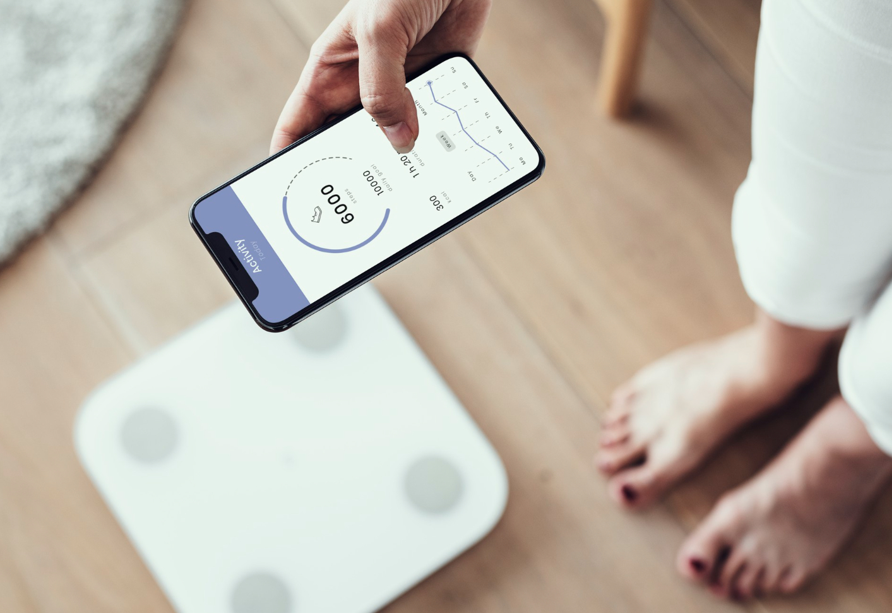
Digital weighing scales for bathrooms are modern devices that use sensitive circuitry to measure your body weight. These scales use load cells that are basically force transducers. These load cells go under the base of the scale. The main function of this component is to convert physical force into a standardized electrical signal. This signal then goes into an Analog-to-Digital Converter (ADC) that converts it into digital data.
Finally, the microcontroller or processor in the scale converts this data into the final weight value which you can see on the LED display. It is also important to note that your weight is not the only thing these scales can measure. Some modern versions of digital bathroom scales can also give you information about your body fat percentage, BMI, bone mass, and more.
Pros of Digital Bathroom Scales
- These scales offer greater measurement precision that allows you to record even the smallest weight variations.
- Digital bathroom scales have clear backlit displays that show weight values in the unit (kg, lb or st).
- Smart bathroom scales also offer features such as built-in memory, Wi-Fi connectivity, Bluetooth capability, unit conversion, etc.
- These scales come in a sleek design that features tempered glass platforms along with compact shapes.
Cons of Digital Bathroom Scales
- These scales cannot operate without batteries or a direct power supply.
- The sensors or circuits in these scales can malfunction.
- Digital bathroom scales are more expensive than analog ones.
- These scales need careful handling due to their sensitive build.
What are Analog Bathroom Scales?
Analog or mechanical bathroom scales use an internal spring mechanism to measure your weight. This mechanism responds to the force that you apply on the scale’s platform. The compression of the spring moves the mechanical indicator on a numbered dial giving you a view of your exact body weight.
Analog scales offer a simple and battery-free means to measure your weight every day. The presence of sturdy mechanical components makes these scales more durable as well as low-maintenance.
Analog scales are not sensitive enough to record slight weight variations. Moreover some users also find it hard to read the dial correctly especially in low-light conditions. These affordable scales are a better choice for people who want a scale with a straightforward design.
Pros of Analog Bathroom Scales
- Analog scales work without any power source which allows you to use them anywhere and at any time.
- These scales are user-friendly. You do not have to learn their settings or use confusing buttons to take the readings.
- These scales are less expensive than smart bathroom scales.
- Analog scales can withstand physical impacts or rough use.
Cons of Analog Bathroom Scales
- These scales show weight in larger measurement increments. You cannot use them to record small weight changes.
- Some users face reading difficulties especially when the needle falls between two markings.
- The mechanical components of these scales deteriorate over time.
- Some analog bathroom scales require manual zero-point adjustment which is hard for some users.
Digital vs. Analog Bathroom Scales: Comparing the Two Options
To help you better understand the differences between digital and analog bathroom scales let’s take a look at a quick comparison table.
| Key Aspects | Digital Bathroom Scales | Analog Bathroom Scales |
| Internal Mechanism | Internal electronic sensors | Mechanical springs |
| Display | LED screens | Numbered dial with a needle |
| Precision | Typically around 0.1 kg or smaller increments | Usually in larger increments |
| Power Supply | Batteries or electrical sockets | No electrical power needed |
| Additional Measurement Features | Includes BMI and body composition measurement capabilities | Involves only basic weight measurement |
| Maintenance Requirements | Occasional battery replacement and electronic care | Frequent cleaning, mechanical adjustment, and calibration |
| Price | Available at various price points that are generally higher than analog scales | Often more affordable |
| Calibration | Some scales have auto-calibration features | May require you to make manual zero-point adjustments |
Digital vs. Analog Bathroom Scales: Key Differences
Digital and analog bathroom scales differ in terms of their accuracy, ease of use, durability, and more. This section lists these differences in detail.
- Accuracy
In terms of accuracy digital bathroom scales are a clear winner. An electronic weighing scale can measure your weight in 0.1 kg or even 0.01 kg increments. This gives you a clearer picture of your current weight.
Analog scales do not have this level of accuracy. The readability of these scales is low which means you cannot use them to track small weight variations.
- Ease of Use
You enjoy a more convenient experience with a digital bathroom scale. These scales come with automatic power ON/OFF and calibration features. You can also use these to calculate your weight in different systems of units that meet your preferences. Clear LED displays on these scales further make it easy for you to record your weight with accuracy.
Analog scales are also straightforward in terms of their usage. These scales do not involve complex buttons and they work without any electrical power. However some users find it hard to interpret the displays of these scales which limits their usability.
- Display
Digital bathroom scales come with backlit LED or LCD screens. These scales show your weight readings in large formats that anyone can instantly read.
In analog scales the display consists of a dial and needle. You have to look closely at the needle to make sure you do not accidentally record the incorrect value of your weight. This is what makes analog scales a less ideal option for some users.
- Calibration Requirements
Digital scales usually have an auto-calibration feature. These scales calibrate on their own once you switch them on or step on them. Some digital bathroom scales also notify you if the calibration of the scale is not right and requires manual intervention.
With analog scales, you may need to check the zero point before weighing and adjust it manually if the needle isn’t at zero.
- Durability
Durability of both digital and analog bathroom scales depends mainly on the material quality as well as the construction of these scales. Digital scales feature electronic circuits or sensors. These components can suffer electrical faults from moisture or physical damage in the bathroom. Modern digital scales with tempered glass, reinforced plastic, and rubber feet however tend to last longer.
Analog scales on the other hand are slightly more durable. However their internal springs or other mechanical components can deteriorate over time. This reduces the accuracy of analog scales.
Which Bathroom Scale Should You Choose?
Now that you have a clear picture of the differences between digital and analog bathrooms scales, let’s discuss which of these options is better. It is not fair to say that either digital or analog scale is universally better. The choice between the two has more to do with your usage, budget, and overall lifestyle.
Digital bathroom scales are a better option for you if you wish to get precise weight measurements to meet specific health goals. You also need these scales if you do not prefer analog displays. And finally choose these scales if you also wish to buy a product that offers smart features such as smartphone connectivity or BMI measurement capability.
Analog bathroom scales are a better option for users with limited budgets who only wish to get an overall picture of their basic body weight occasionally. These scales are also a good option if durability and simplicity are your biggest concerns.
Overall digital bathroom scales tend to work best as they promise the highest accuracy, longer lifespans, and additional features that support your health or fitness regimen.
Conclusion
Before you choose between a digital and an analog bathroom scale it is always a good idea to compare their key features. Having an idea about the pros and cons of these scales can help you choose an option that meets your budget and measurement reliability requirements.
Analog scales work best for people who want to get basic weight readings without any complex features. Digital bathroom scales are ideal for users who wish to get a comprehensive view of their weight as well as overall fitness in the comfort of their home.
So before you buy a bathroom scale make sure to compare different options in terms of their features, ease of use, budget, and durability to make the right purchase every single time.
Visit our website EAGLE MEA today to check out our wide range of digital bathroom scales that offer the highest measurement accuracy. We also specialize in all types of weighing solutions for personal, commercial, and industrial applications to meet all of your measurement requirements.


0 Comments